
Why Static Findings Fall Short in Mobile Security
Most app scanning tools just tell you what's wrong. They flag the vulnerability, assign a severity, and maybe show a code snippet and a brief impact summary. After that, they leave it up to developers to figure it out. Vendors do this on purpose, trying to keep findings brief so developers aren’t overwhelmed and tempted to ignore them.
But for today’s mobile apps, this isn’t enough. Apps handle payments, store sensitive data, connect to dozens of APIs, and run in environments developers don’t control. A single finding doesn’t tell the full story. Developers need context—how the issue shows up in their app, what dependencies it touches, and what the safe fix looks like.
This is exactly why code scanners and code editors are racing to bolt on AI. Static advice alone isn’t working. Developers need help making sense of complex findings and turning them into fixes.
The catch is that legacy tools are still only working with source code. They don’t always see how the app is actually packaged, the third-party SDKs, its runtime behavior, and how the underlying device risk posture impacts the security of the app.
And that’s where zScan comes in.
A Smarter Way to Remediate
To address this challenge directly, Zimperium has added a new feature to zScan, our mobile app binary scanning capability within the MAPS platform.
But instead of just static advice, developers now also get AI-enriched, human-curated recommendations and insights. When reviewing an assessment, they’ll see an AI assistant button for relevant findings. Clicking it will open an AI Insights side panel with more in-depth information about the finding.
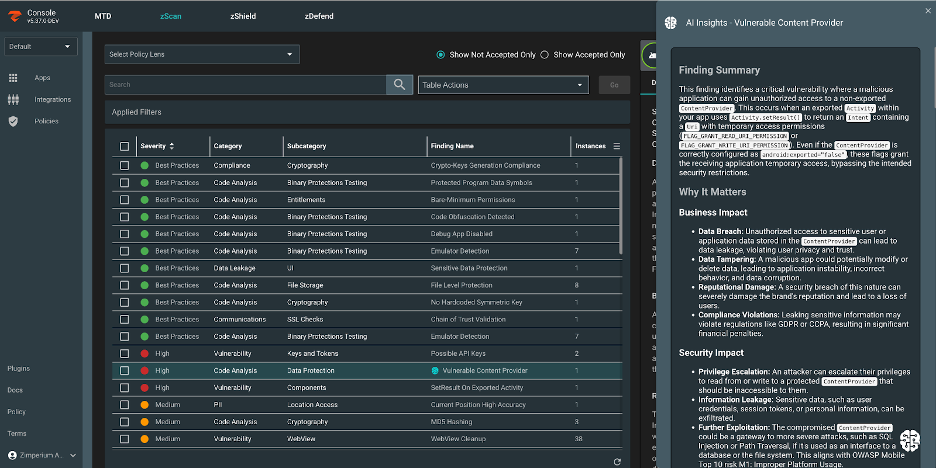
Fig: AI Assistant Button and AI Insights Side-panel
What makes the AI insights information powerful is the context it draws from. Because zScan analyzes the final mobile app binary—not source code—and applies both static and dynamic analysis, the AI has a much richer picture of how the app is built, configured, and behaves. That means the guidance isn’t generic. Developers get context-aware fixes, code or configuration snippets, and the ability to ask follow-up questions that tie directly to how their app actually runs.
The importance of asking more questions cannot be overstated since zScan’s AI doesn't offer generic answers. It uses the full context gathered during the static and dynamic analysis, even details that don’t normally surface in the UI for brevity. This means the guidance is in-depth and specific to the app, not one-size-fits-all.
This additional AI-driven context matters for three key reasons:
- Deeper understanding – Developers can drill down if they want detail, or keep it simple if they don’t.
- Faster fixes – Actionable snippets cut down the research time.
- Safer fixes – Security experts review AI suggestions before they reach developers.
The goal is simple: reduce mean time to remediate (MTTR) without disrupting velocity.
The Outcome
With this new zScan AI-enriched capability in MAPS, developers spend less time searching for answers and more time building secure mobile applications. It also makes it easier for security teams to ensure and gain confidence that critical security, privacy, and regulatory fixes are applied correctly with each release,reducing exploitable vulnerabilities in every app you ship.
This is what practical GenAI looks like in mobile app security: not abstract, not hype, but clear, actionable help where it’s needed most, at the point of fix.
Ready to See It in Action?
Start a free trial of zScan or contact us to learn more.
-1.png)

.png)